 blog
blog
3D Ultrasound vs Medical Ultrasound: Key Differences
Table of Contents
- What Is a Medical Ultrasound?
- What Is a 3D Ultrasound?
- Elective Ultrasound vs Medical Ultrasound: The Core Distinction
- 3D Ultrasound vs 2D Ultrasound: Technology and Imaging
- Best Time for 3D Ultrasound During Pregnancy
- 3D Ultrasound Safety During Pregnancy: What You Need to Know
- Making Your Choice: Medical Ultrasound, 3D Keepsake, or Both?
- Frequently Asked Questions
Last Updated: October 7, 2026
What Is a Medical Ultrasound?
When considering 3D ultrasound vs medical ultrasound, it's important to understand that a medical ultrasound is a diagnostic imaging procedure performed by a healthcare provider to assess fetal development, detect potential complications, and monitor pregnancy health. It uses sound waves to create two-dimensional images of your baby and is typically covered by insurance as part of standard prenatal care.
Your obstetrician or certified ultrasound technician performs these scans during routine prenatal appointments. Medical ultrasounds serve a clinical purpose: they measure fetal growth, check for structural abnormalities, confirm due dates, and identify any concerns that require medical attention. These are essential screenings that every pregnant person should receive as part of their healthcare regimen.
The images produced are functional and diagnostic rather than aesthetic. While you'll see your baby on the screen, the focus is on gathering specific medical data. Most pregnant people receive at least two medical ultrasounds during pregnancy, one in the first trimester and another in the second trimester, as recommended by standard prenatal protocols.
What Is a 3D Ultrasound?
A 3D ultrasound captures three-dimensional images of your baby, creating a more lifelike view than traditional 2D scanning. Unlike medical ultrasounds, 3D ultrasounds are typically elective services designed to give expectant parents a detailed visual keepsake of their baby before birth rather than serve a diagnostic medical purpose.
3D technology reconstructs multiple 2D ultrasound images into a three-dimensional model. This allows you to see your baby's facial features, body position, and movements from different angles. The result is a more intimate, personal experience, many parents describe it as their first real introduction to their baby.
At BabyView3D in Arlington, we specialize in creating these memorable 3D keepsake experiences. Our service is designed to capture precious moments and provide high-quality images and videos you can treasure forever. This isn't about replacing your medical ultrasounds; it's about creating a unique bonding opportunity during your pregnancy journey.
Elective Ultrasound vs Medical Ultrasound: The Core Distinction
The most important difference between elective ultrasound vs medical ultrasound comes down to purpose and necessity. Medical ultrasounds are diagnostic tools required for safe prenatal care. Elective ultrasounds, including 3D keepsake services, are optional experiences that prioritize emotional connection and memorable keepsakes over clinical assessment.
Medical ultrasounds answer critical questions: Is the baby growing normally? Are there any structural concerns? What is the due date? A healthcare provider interprets these images and discusses findings with you. The scan is brief, focused, and clinically oriented.
Elective 3D ultrasounds answer different questions: What does my baby look like? Can we see facial features? What position is the baby in? These scans take longer, focus on capturing the best angles and expressions, and result in images designed for sharing and remembering. Many families in Arlington choose both, their medical ultrasounds with their OB and a separate 3D keepsake session to celebrate their pregnancy.
Your insurance covers medical ultrasounds because they're medically necessary. Elective ultrasounds are out-of-pocket expenses that you choose based on your preferences and budget. Neither replaces the other; they serve different needs in your pregnancy experience.
3D Ultrasound vs 2D Ultrasound: Technology and Imaging
The difference between 3D ultrasound vs 2D ultrasound is primarily technical and visual. A 2D ultrasound produces flat, two-dimensional images, what you see in your medical appointments. A 3D ultrasound uses specialized software to compile multiple 2D images into a three-dimensional representation that shows depth and volume.
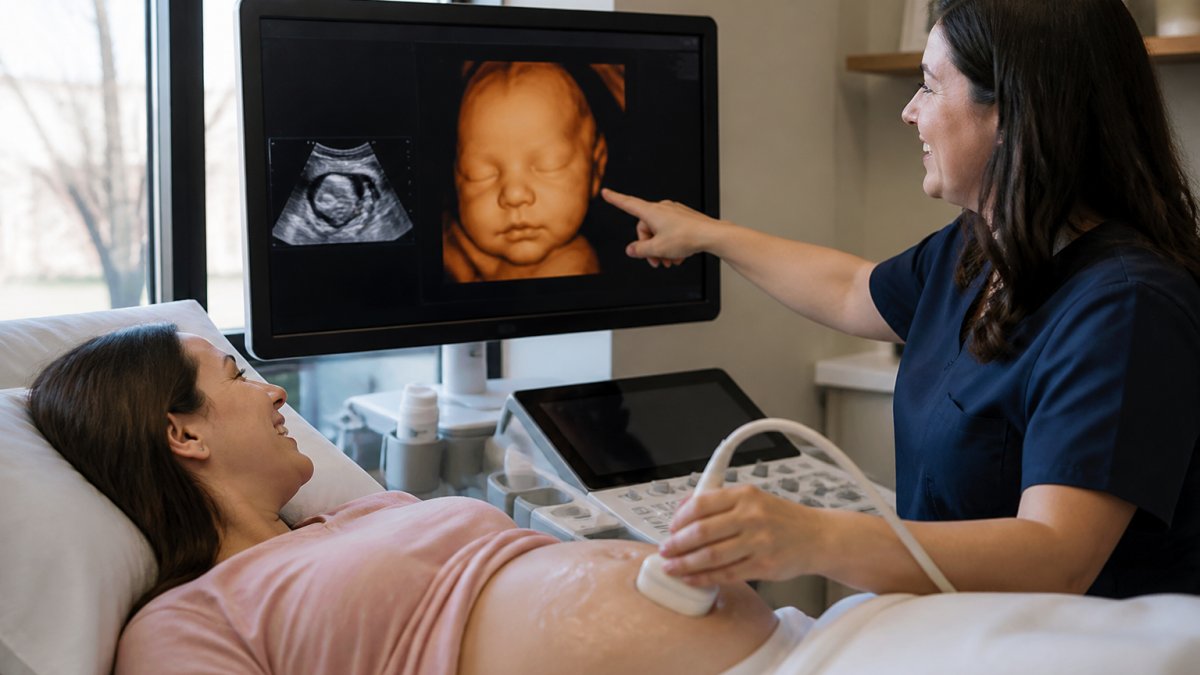
2D imaging is the standard for medical diagnostics because it allows precise measurement and clear visualization of internal structures. Radiologists and OBs are trained to interpret 2D images quickly and accurately. It's the technology used in every standard prenatal ultrasound.
3D imaging adds visual depth that makes the baby appear more lifelike. You can see facial contours, hand positions, and body shape in ways that 2D imaging doesn't reveal. Many parents find 3D images more emotionally engaging because they look more like a photograph of their baby than a medical scan.
4D ultrasound (sometimes mentioned alongside 3D) adds motion, it's essentially 3D imaging in real time, showing your baby moving and interacting. The "D" stands for dynamic or dimension of time.
Both 2D and 3D ultrasounds use the same basic technology: sound waves that reflect off tissues and create images. The difference is in how those sound waves are processed and displayed. Medical ultrasounds prioritize diagnostic clarity; 3D keepsake ultrasounds prioritize visual appeal and emotional impact.
Best Time for 3D Ultrasound During Pregnancy
The ideal timing for a 3D ultrasound is between 26 and 30 weeks of gestation. At this stage, your baby's facial features are well-developed and clearly visible, but there's still adequate amniotic fluid and space for optimal imaging angles.
Before 20 weeks, your baby is still quite small, and facial features aren't detailed enough to create the lifelike 3D images most parents want. After 32 weeks, the baby's position becomes more cramped, and they may be facing your spine, making it harder to capture good facial views.
Many families in Arlington choose to schedule their 3D ultrasound around 28 weeks, right in the middle of the optimal window. This timing also gives you enough pregnancy left to plan a gender reveal celebration if you haven't already confirmed your baby's sex, or simply to share the beautiful images with family and friends.
If you're earlier in pregnancy (around 20 weeks), you can still get a 3D ultrasound, but image quality may be less detailed. Some facilities offer a complimentary second session if you're not satisfied with results from an earlier scan. Always confirm the rescheduling policy when you book.
3D Ultrasound Safety During Pregnancy: What You Need to Know
Many expectant parents worry about whether 3D ultrasounds are safe. When comparing 3D ultrasound vs medical ultrasound, the short answer is that 3D ultrasound uses the same sound-wave technology as medical ultrasounds, and there are no known risks from ultrasound exposure during pregnancy when performed by qualified professionals.
Ultrasound has been used in prenatal care for decades with an excellent safety record (value is what Coveo indexes and uses as the title in Search Results.--> <title>Guidelines...). The FDA recognizes ultrasound as a safe imaging modality for pregnancy (the FDA). 3D ultrasound doesn't use any radiation, contrast dyes, or invasive procedures, it's purely acoustic imaging.
The key safety factor is who performs the scan. Medical ultrasounds are performed by certified sonographers or radiologists with formal training. When you choose an elective 3D ultrasound provider, verify that the technician is trained in ultrasound operation and understands proper technique. At BabyView3D, we ensure our team is qualified to provide a comfortable experience.
One concern some parents have: Will the ultrasound probe or the ultrasound energy harm my baby? The answer is no. The ultrasound transducer is placed on your skin (usually your abdomen), and the sound waves pass through tissue harmlessly. The energy levels used in ultrasound imaging are very low and are not associated with any adverse fetal effects.
Another consideration: Elective ultrasounds should not replace your medical ultrasounds. If your OB has recommended specific scans for medical reasons, those are essential. Elective 3D ultrasounds are an addition to your care, not a substitute.
Making Your Choice: Medical Ultrasound, 3D Keepsake, or Both?
Many families choose both medical and elective 3D ultrasounds during pregnancy, and that's a perfectly valid approach. Here's how to think about the decision:
Choose a medical ultrasound if:
- You're pregnant and haven't had prenatal ultrasounds yet (these are medically necessary)
- Your OB has recommended specific diagnostic scans
- You want clinical assessment of fetal development and health
Choose a 3D keepsake ultrasound if:
- You want detailed, lifelike images of your baby to keep and share
- You're looking for a bonding experience and emotional connection during pregnancy
- You want high-quality videos or still images for a gender reveal or announcement
- You're seeking a non-clinical, spa-like environment for your ultrasound experience
Choose both if:
- You want the medical assessment and the keepsake experience
- You're early enough in pregnancy to do both comfortably
- Your budget allows for both services
The decision ultimately depends on your priorities and what you hope to get from the experience. Medical ultrasounds are non-negotiable for safe prenatal care. 3D keepsake ultrasounds are optional but deeply meaningful for many families.
If you're in Arlington and interested in a 3D keepsake experience, BabyView3D offers a unique service designed to create memorable moments during your pregnancy. Our goal is to provide stunning 3D imaging in a welcoming environment that celebrates your pregnancy journey.
| Ultrasound Type | Primary Purpose | Frequency | Provider | Cost Covered by Insurance |
|---|---|---|---|---|
| Medical 2D | Diagnostic assessment | 2-3 during pregnancy | OB/Radiologist | Yes |
| 3D Keepsake | Emotional bonding & images | 1-2 optional sessions | Specialized provider | No |
| 4D (Real-time 3D) | Dynamic viewing & video | Optional | Specialized provider | No |
Choosing between medical ultrasounds and 3D keepsake ultrasounds doesn't have to be an either-or decision. Medical ultrasounds are essential for monitoring your baby's health and development throughout pregnancy. According to the American College of Obstetricians and Gynecologists guidelines, routine ultrasound screening is a standard part of prenatal care. 3D keepsake ultrasounds complement that care by giving you beautiful, detailed images to treasure. At BabyView3D in Arlington, we help expectant parents capture precious moments in stunning 3D. Book a session with us to see your baby in vivid detail and create keepsakes that celebrate your pregnancy journey.
Frequently Asked Questions
What is the difference between a 3D ultrasound and a medical ultrasound?
Medical ultrasounds are diagnostic tools performed by your OB-GYN to monitor fetal development, check for complications, and measure growth. They use 2D imaging to assess health and safety. A 3D ultrasound creates three-dimensional images of your baby for keepsakes and bonding, it's elective, not diagnostic. Medical ultrasounds are covered by insurance; 3D ultrasounds are not. Both use the same technology, but they serve different purposes and are performed in different settings.
When is the best time for 3D ultrasound during pregnancy?
The best time for 3D ultrasound is typically between 26 and 30 weeks of gestation. At this stage, your baby has enough fat under the skin to create clear, detailed facial features, and there is still enough amniotic fluid for good image quality. Before 20 weeks, images may be less defined. After 32 weeks, positioning and reduced fluid can make it harder to capture sharp images. Your provider can recommend the optimal timing based on your pregnancy.
Is 3D ultrasound safe during pregnancy?
Yes, 3D ultrasound uses the same ultrasound technology as medical ultrasounds and is considered safe when performed by trained professionals. The FDA has not identified any harmful effects from ultrasound at the frequencies and power levels used in obstetrics. However, elective ultrasounds should be performed by qualified technicians and kept brief. If you have concerns about safety or your pregnancy, consult your healthcare provider before scheduling an elective 3D session.
Can a 3D ultrasound replace my regular prenatal ultrasounds?
No. Your medical ultrasounds with your OB-GYN are essential for monitoring your baby's health, checking for complications, and ensuring normal development. A 3D ultrasound is a keepsake experience, not a diagnostic tool. Your doctor cannot diagnose conditions or measure critical markers during a 3D session the way they do during a medical ultrasound. You need both: regular prenatal ultrasounds for health, and 3D ultrasounds for memories.