 comparison
Are Private 3D Ultrasounds Worth It: A 2026 Guide
Table of Contents
- What Private 3D Ultrasounds Actually Offer
- Is 3D Ultrasound Safe for Baby
- Elective Ultrasound vs Diagnostic Ultrasound: What's the Difference
- Best Time for 3D Ultrasound During Your Pregnancy
- Cost Considerations: Is It Worth the Investment
- The Real Benefits and Honest Drawbacks
- Making Your Decision: Who Should Get a Private 3D Ultrasound
- Frequently Asked Questions
Last Updated: October 4, 2026
What Private 3D Ultrasounds Actually Offer
Standard ultrasounds from your OB-GYN provide critical medical information about your baby's development. Private 3D ultrasounds offer something different: a detailed visual keepsake of your baby before birth. At BabyView3D, we focus on creating that memorable experience rather than replacing your diagnostic care.
A private 3D ultrasound captures your baby's facial features and movements in three-dimensional detail. Unlike flat, grayscale 2D images from routine prenatal care, 3D imaging lets you see your baby's face as it would appear after birth, creating an emotional connection that standard ultrasounds don't provide.
The key distinction is purpose. Your OB-GYN's ultrasounds are diagnostic tools designed to measure growth, check organ development, and screen for complications. Private 3D ultrasounds are elective experiences focused on bonding and keepsakes. This difference shapes the equipment, environment, cost, and expectations.
BabyView3D brings this experience to expectant parents, offering a comfortable setting where you can bring family and celebrate this milestone. The service includes high-quality digital images and videos you can share with loved ones or keep as lasting memories.
Is 3D Ultrasound Safe for Baby
Ultrasound technology, including 3D imaging, has been extensively studied and uses sound waves rather than radiation. The American College of Obstetricians and Gynecologists recognizes ultrasound as safe when used appropriately in clinical and elective settings (value is what Coveo indexes and uses as the title in Search Results.--> <title>Guidelines...).
Is 3D ultrasound safe for your baby? Yes. Sound waves have not been shown to harm fetal development, equipment operates well below harmful power levels, and the procedure is non-invasive with no needles, dyes, or medications.
Diagnostic ultrasounds performed by trained sonographers follow strict safety protocols (Standards and Guidelines for the Accreditation of Ultrasound Practices). Elective ultrasounds should follow similar standards. The key is ensuring the person performing the scan is properly trained in ultrasound safety and technique.
Current medical guidance suggests that the established benefits of medically indicated ultrasounds outweigh theoretical risks. For elective scans, the safety profile remains favorable when performed by qualified personnel with clear purpose.
When considering a private 3D ultrasound, verify that the provider uses FDA-cleared equipment and employs trained sonographers who understand ultrasound safety protocols.
Elective Ultrasound vs Diagnostic Ultrasound: What's the Difference
Diagnostic ultrasounds are medically necessary scans ordered by your OB-GYN or midwife to assess your baby's health. They occur at specific intervals: dating scan (8-14 weeks), anatomy scan (18-22 weeks), and growth scans as needed. They measure fetal size, check organ development, and screen for complications. They're covered by insurance.
Elective ultrasounds are optional scans you choose to see your baby's face, confirm sex, or create keepsakes. They aren't medically necessary, aren't covered by insurance, and aren't part of standard prenatal care. Private 3D ultrasounds fall into this category.
Diagnostic ultrasounds prioritize medical measurements and screening; technicians take precise measurements rather than optimize image quality for viewing. Elective ultrasounds prioritize visual experience and image quality for keepsakes, with time spent positioning your baby for the best facial views and videos. This shift toward prioritizing a personalized, high-touch experience mirrors the broader trend of families seeking concierge medical services to gain more control over their healthcare journey.
| Aspect | Diagnostic | Elective (3D/4D) |
|---|---|---|
| Purpose | Medical assessment | Bonding and keepsakes |
| Covered by Insurance | Yes | No |
| Performed by | Credentialed sonographer in clinical setting | Trained sonographer in private setting |
| Focus | Measurements and screening | Image quality and experience |
| Frequency | 2-4 times during pregnancy | 1-3 times (optional) |
| Cost | Covered by insurance | Out-of-pocket expense |
Will a private 3D ultrasound detect problems your doctor missed? No. Elective ultrasounds aren't designed for medical screening and shouldn't replace diagnostic care. Private 3D ultrasounds complement your medical care; they don't substitute for it.
Best Time for 3D Ultrasound During Your Pregnancy
Timing determines image quality and clarity. Schedule too early and your baby lacks facial definition; too late and positioning becomes difficult.
The ideal window for a 3D ultrasound is between 26 and 32 weeks. Your baby has developed enough facial fat for clear features, amniotic fluid is adequate for good image quality, and your baby has room to position for clear facial views.
Before 26 weeks, your baby's face lacks the fat deposits needed for clear 3D definition. Early scans can confirm gender at 18-22 weeks, but 3D facial imaging works better later.
After 32 weeks, your baby has less room to move, positioning becomes challenging, and amniotic fluid decreases, affecting image quality. Scans are still possible but results are often less impressive.
Many expectant parents schedule their elective scan around the same time as their anatomy scan or shortly after, celebrating that milestone with a keepsake experience. For gender reveal celebrations, scheduling around 26-28 weeks allows planning time while maintaining good image quality.
Cost Considerations: Is It Worth the Investment
Private 3D ultrasounds are an out-of-pocket expense with no insurance coverage. Understanding what influences cost helps you make a budget-aligned decision.
Session length affects pricing: a 15-minute quick peek costs less than a 45-minute comprehensive session with videos. Digital keepsakes are standard; printing, framing, or custom merchandise add to the total. Location and facility overhead also influence pricing.
When evaluating cost, consider what's included. Does the package include digital images, videos, or both? Are prints or USB storage included, or are those add-ons? Can you bring family members, or is there a limit on attendees? These details determine whether you're getting good value.
The honest question: Is it worth the money? That depends entirely on what matters to you. For expectant parents who want a special bonding experience, high-quality keepsakes to share with family, and a memorable celebration of their pregnancy, the investment often feels worthwhile. For parents on a tight budget or those who feel their diagnostic ultrasounds are sufficient, it's an optional luxury.
Consider your priorities. Are you looking for reassurance about your baby's development? Your OB-GYN's diagnostic ultrasounds serve that purpose and are covered by insurance. Are you hoping to create lasting memories and see your baby's face before birth? That's what private 3D ultrasounds deliver. Are you planning a gender reveal celebration and want visual confirmation? That's a specific use case that justifies the cost for many families.
The Real Benefits and Honest Drawbacks
Private 3D ultrasounds offer genuine emotional benefits, but they also come with real limitations worth acknowledging before you decide.
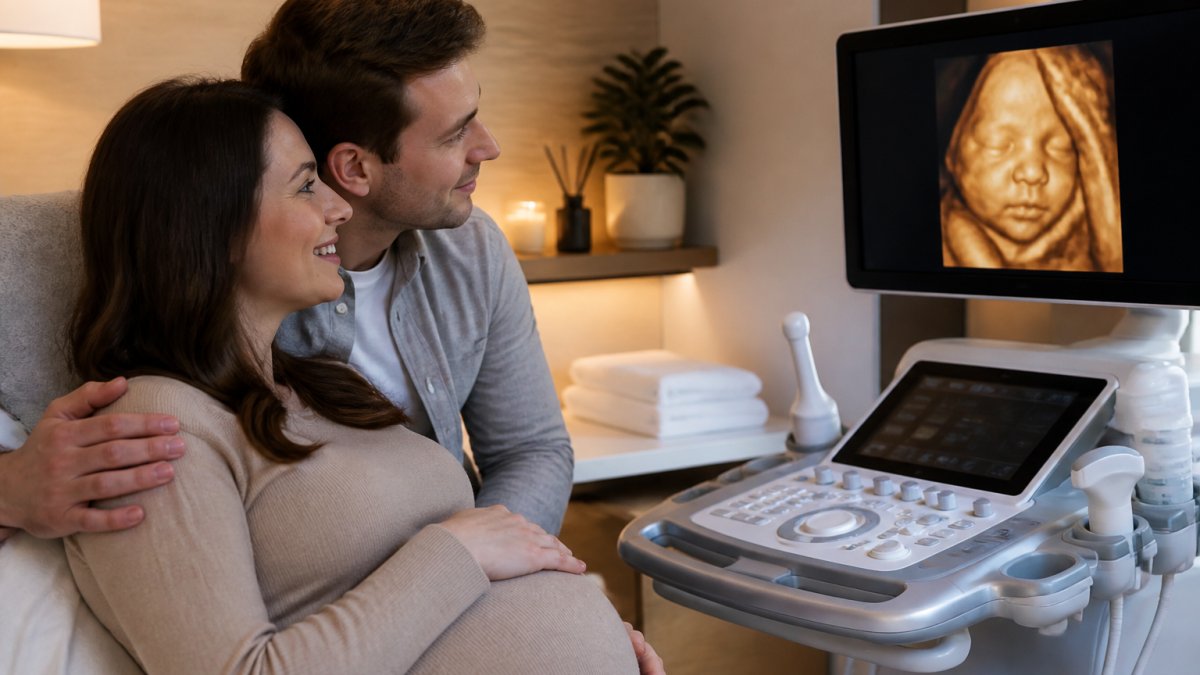
The benefits are real. Many expectant parents report that seeing their baby's face in 3D creates a stronger emotional connection than 2D diagnostic images. The experience becomes tangible, you're not just hearing "your baby is developing normally" from a clinical ultrasound; you're seeing your baby's features and personality emerging.
The bonding aspect matters. Expectant parents often describe the 3D ultrasound as a turning point where their baby feels more real. Partners who may feel disconnected from pregnancy sometimes connect more deeply when they see their baby's face on the monitor.
The drawbacks are also real. First, image quality isn't guaranteed. If your baby is positioned poorly, has their hand in front of their face, or is turned away from the probe, the images may be unclear or disappointing. You're paying for an experience with uncertain results.
Second, these scans can trigger anxiety rather than relieve it. If you notice something unusual on the screen, a facial feature that looks different, a position that seems odd, you may worry unnecessarily. Remember: elective ultrasounds aren't designed to detect abnormalities, and a trained technician won't provide medical interpretation.
Third, the experience is expensive for what amounts to a few images and videos. If budget is tight or you're already managing medical costs, this discretionary spending may not fit your priorities.
Finally, not every expectant parent wants this experience. Some find the clinical environment uncomfortable regardless of how spa-like the facility claims to be. Others feel the experience is unnecessary when they already have ultrasound images from their doctor.
Making Your Decision: Who Should Get a Private 3D Ultrasound
This choice is deeply personal, but certain situations make private 3D ultrasounds a better fit than others.
You're a good candidate if: You have a healthy pregnancy confirmed by your OB-GYN's diagnostic ultrasounds and you're looking for a special bonding experience. You want high-quality keepsakes to share with family or commemorate your pregnancy. You're planning a gender reveal celebration and want visual confirmation of your baby's sex. You enjoy special experiences and view this as a pregnancy milestone worth celebrating.
You might skip it if: You're managing pregnancy anxiety and worry that an unclear scan might increase stress rather than relieve it. Budget is tight and you'd rather direct those funds elsewhere. You feel your diagnostic ultrasounds are sufficient and don't see added value in elective imaging. You're uncomfortable in medical or clinical settings, even spa-like ones.
The decision also depends on your values. If creating lasting memories and celebrating your pregnancy are important to you, private 3D ultrasounds align with that priority. If you prefer a more private, low-key pregnancy experience, they don't. Neither choice is better, they're just different.
If you do decide to pursue a private 3D ultrasound, choose your provider carefully. Verify that they employ trained sonographers, use FDA-cleared equipment, and can explain their safety protocols. Ask about their image quality guarantee and what happens if your scan doesn't produce clear images. Read reviews from other expectant parents.
Private 3D ultrasounds aren't medically necessary, but they can be emotionally meaningful for expectant parents seeking to bond with their baby and create lasting keepsakes. If you're drawn to the idea of seeing your baby's face in stunning detail and want to celebrate that moment with family, BabyView3D offers a warm, welcoming experience designed to capture precious moments you'll treasure forever.
Frequently Asked Questions
What is the difference between a diagnostic ultrasound and a private 3D ultrasound?
Diagnostic ultrasounds are ordered by your OB-GYN to check your baby's health, development, and detect any medical concerns. They are medically necessary and typically covered by insurance. Private 3D ultrasounds are elective imaging sessions designed to create keepsake images and videos. They are not medically diagnostic and are paid out-of-pocket. While private 3D ultrasounds use similar technology, they focus on creating memorable images rather than medical evaluation.
Is 3D ultrasound safe for baby according to the FDA?
The FDA has not identified any harmful effects from ultrasound imaging when used appropriately. Ultrasound technology is considered safe for prenatal imaging. However, private 3D ultrasounds are elective, not medically necessary. The FDA recommends that ultrasounds be performed by trained professionals with a clear medical purpose. Always verify that any provider you choose employs qualified sonographers and uses medical-grade equipment to ensure the safest experience.
At what week of pregnancy is a 3D ultrasound best?
The optimal window for 3D ultrasound imaging is between 26 and 32 weeks of pregnancy. During this period, your baby has enough fat deposits under the skin to create clear, detailed 3D images, and the baby is still positioned well within the uterus for good visualization. Before 20 weeks, images may be less defined. After 32 weeks, the baby's position and decreased amniotic fluid can make imaging more challenging. Discuss the best timing with your provider based on your specific pregnancy.
How much does a private 3D ultrasound cost?
Pricing for private 3D ultrasounds varies depending on the provider, location, session length, and package options. Since these are elective services, they are not covered by insurance and are an out-of-pocket expense. Contact your local provider directly for current pricing and available packages. BabyView3D can provide a quote tailored to your needs and preferences.
Do I need a doctor's referral for a private 3D ultrasound?
Most private 3D ultrasound providers do not require a doctor's referral since these are elective, non-diagnostic services. However, it's a good idea to mention your plans to your OB-GYN to ensure you're at an appropriate stage of pregnancy and that there are no medical reasons to avoid the procedure. Some providers may ask for confirmation of your due date or basic pregnancy information before scheduling.