 Listicle
Cost of Private 3D Ultrasound: 2026 Pricing Guide
Table of Contents
- What Affects the Cost of Private 3D Ultrasound
- Private 3D Ultrasound Packages: What You'll Find
- Is 3D Ultrasound Safe for Baby: What Research Shows
- Best Time for a 3D Ultrasound During Your Pregnancy
- Elective Ultrasound Insurance Coverage: What to Know
- How to Choose the Right Package for Your Budget
- Conclusion
- Frequently Asked Questions
Last Updated: October 16, 2026
What Affects the Cost of Private 3D Ultrasound
The cost of private 3D ultrasound varies significantly depending on several key factors. Understanding what drives pricing helps you make an informed decision about which package fits your budget and needs.
Location matters most. Ultrasound providers in Arlington and surrounding areas typically charge differently based on local market conditions, facility overhead, and equipment quality. Urban centers tend to have higher costs than rural areas, though this varies by region.
Gestational age affects pricing too. Early pregnancy scans (before 16 weeks) may cost less because the baby is smaller and images are simpler to obtain. Mid-pregnancy scans (16-24 weeks) are often the sweet spot for 3D imaging and fall into standard pricing tiers. Late-pregnancy scans (28+ weeks) can be more expensive because positioning becomes trickier and sessions may take longer.
Session duration directly impacts cost. A quick 15-minute scan costs less than an extended 45-minute session where you get multiple angles, detailed measurements, and extended video footage. Premium packages often include longer session times and higher video resolution.
Package inclusions drive the price difference. Basic packages might include a few printed images. Mid-range options add digital files and video clips. Premium tiers include extended sessions, professional editing, and keepsake options like 3D printed models or framed artwork.
The ultrasound equipment itself matters. Newer 4D and 5D technology with HD imaging costs more than standard 3D. Facilities with the latest equipment charge accordingly because they've invested heavily in technology that produces sharper, more detailed images.
Private 3D Ultrasound Packages: What You'll Find
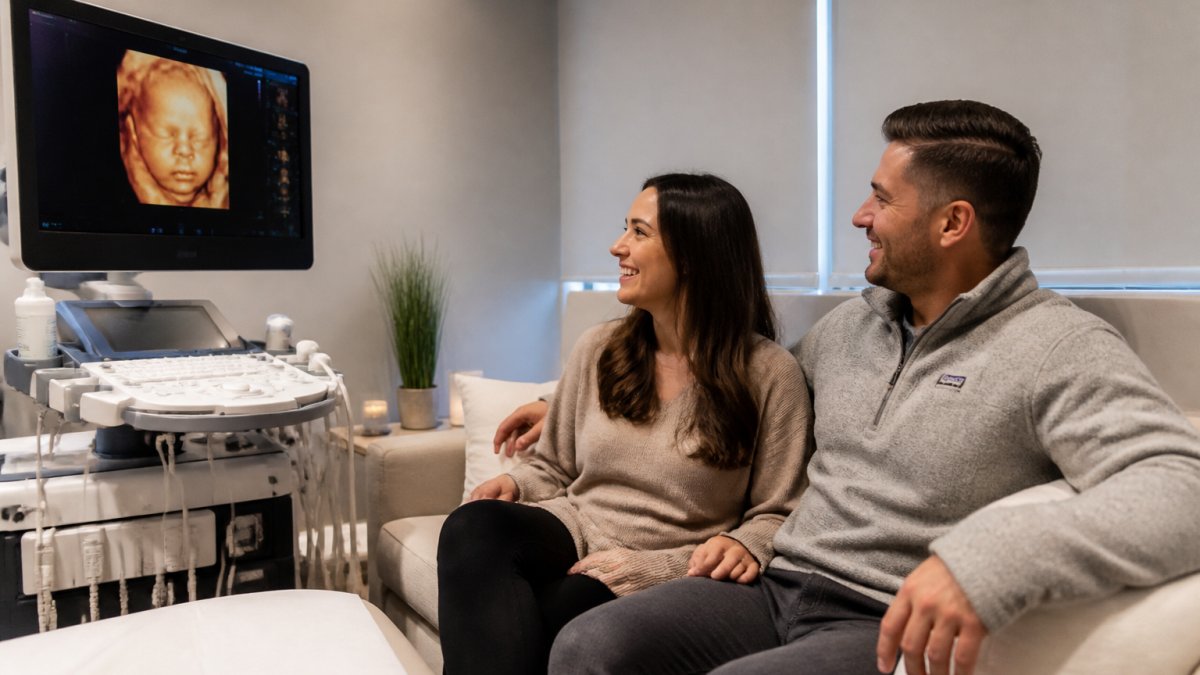
Providers across the country offer three main package tiers. Each tier reflects different image quality, session length, and keepsake options. Here's what typically falls into each category.
Entry-Level Packages
Entry-level packages are designed for parents on a tight budget who want to see their baby but don't need extensive add-ons. These usually include a basic 15-20 minute session with standard 3D imaging, a handful of printed photos, and sometimes a short video clip on a USB drive.
Pricing for entry-level packages generally starts lower than mid-range options. You get clear 3D images and confirmation of gender if desired, but the session is shorter and the number of keepsake options is limited. This tier works well if you already have ultrasound images from your OB and just want a special keepsake experience.
Many providers offer entry-level packages for early pregnancy scans (8-16 weeks) since images are simpler to capture. The tradeoff is that early scans show less detail than mid-pregnancy ones, though you still get recognizable 3D views of your baby.
Mid-Range Packages
Mid-range packages are the most popular choice. They balance cost with quality, offering 30-45 minute sessions, multiple printed images, digital video files, and sometimes additional keepsakes like a framed photo or greeting card.
These packages typically include higher-resolution imaging than entry-level options. You get more time to see your baby from different angles, and the provider captures more moments. Many mid-range packages allow you to bring family members to watch the session, which adds to the experience.
Mid-range options often include gender confirmation, detailed measurements, and sometimes a heartbeat recording. Some providers throw in a 3D printed image or a small canvas print of your favorite scan. This tier appeals to parents who want a memorable experience.
Premium Packages
Premium packages offer the full experience. These include extended sessions (45-60 minutes), professional-grade 4D or 5D imaging, extensive video footage, and multiple keepsake options. You might get a 3D printed model of your baby's face, a framed professional-quality photo, and a custom video with music and editing.
Premium tiers cater to parents planning gender reveals or wanting the highest-quality keepsakes. The imaging is sharper, the session feels more like a special event, and the keepsakes are truly professional.
These packages justify higher pricing through superior equipment, longer provider time, professional video editing, and luxury keepsake options. If you want the best possible images and mementos, premium is the choice.
Is 3D Ultrasound Safe for Baby: What Research Shows
Safety is a legitimate concern for any parent considering elective ultrasound. The good news is that ultrasound technology has been used in obstetrics for decades, and the evidence supports its safety when used appropriately.
Ultrasound works by sending sound waves through tissue and measuring the echoes that bounce back. These sound waves are not ionizing radiation like X-rays, so they don't carry the same risks. The FDA regulates ultrasound equipment and has cleared it for obstetric use based on extensive research.
The key safety principle is ALARA: As Low As Reasonably Achievable. This means using the minimum ultrasound energy needed to get good images, keeping session duration reasonable, and avoiding unnecessary scanning. Reputable providers follow this principle strictly.
Most medical organizations, including the American College of Obstetricians and Gynecologists, consider ultrasound safe for diagnostic and monitoring purposes during pregnancy (value is what Coveo indexes and uses as the title in Search Results.--> <title>Ultrasound...). Elective 3D ultrasounds fall into a gray area since they're not medically necessary, but they use the same basic technology and follow the same safety protocols.
One common concern is overheating of fetal tissue from prolonged ultrasound exposure. Research shows this is not a realistic risk during standard ultrasound sessions. The heat generated is minimal, and the body's natural cooling mechanisms easily manage it.
Another worry involves the mechanical effects of ultrasound energy on developing tissue. Again, research at normal diagnostic intensities shows no harmful effects. The ultrasound industry and medical regulators have monitored this carefully for decades.
The bottom line: 3D ultrasound is considered safe when performed by trained professionals using approved equipment. Choose a provider who follows safety guidelines, keeps sessions to reasonable lengths, and doesn't use unnecessary high-intensity settings.
Best Time for a 3D Ultrasound During Your Pregnancy
Timing matters for image quality. The ideal window for 3D ultrasound is between 26 and 34 weeks of pregnancy. During this period, your baby has enough size and definition to create clear, detailed 3D images, but hasn't positioned themselves so low that imaging becomes difficult.
Before 20 weeks, 3D images are possible but less detailed. Your baby is smaller, and the amniotic fluid volume is lower, which affects image clarity. If you choose an early scan, manage expectations for image quality.
Between 20 and 26 weeks, 3D imaging improves significantly. Your baby is larger and more developed, and there's adequate amniotic fluid for good visualization. This is a reasonable time for a first 3D ultrasound if you're eager to see your baby early.
The 26-34 week window is optimal. Your baby's facial features are fully developed and visible, there's plenty of amniotic fluid for clear imaging, and your baby is still active enough to move around for different viewing angles. Most providers recommend this timeframe for the best results.
After 34 weeks, imaging becomes more challenging. Your baby is larger and may be positioned head-down in preparation for delivery, making certain angles difficult to capture. The amount of amniotic fluid decreases, which can reduce image clarity. Late scans are possible but may produce less impressive results.
If you're planning a gender reveal, the 16-24 week window works well. Gender confirmation is reliable after 16 weeks in most cases, and the baby is still small enough for good positioning.
Book your appointment with enough advance notice. Many providers in Arlington have waiting lists, especially during peak seasons. Scheduling 4-6 weeks ahead ensures you get your preferred date.
Elective Ultrasound Insurance Coverage: What to Know
Insurance coverage for elective 3D ultrasound is limited. Most health insurance plans classify these scans as non-medical services since they're not diagnostically necessary. Your regular OB ultrasounds are covered as part of prenatal care, but elective 3D imaging typically is not.
Some insurance plans may cover a portion of costs if your OB recommends an ultrasound for specific medical reasons, but this is rare for purely elective services. Coverage varies by plan, so check your policy or call your insurance company directly.
Flexible spending accounts (FSAs) and health savings accounts (HSAs) sometimes allow you to use pre-tax dollars for elective ultrasounds, depending on your plan's rules. Ask your plan administrator whether elective ultrasound qualifies. This can reduce your out-of-pocket cost by the amount of your tax savings.
Some employers offer wellness benefits that might cover elective ultrasounds. It's worth checking with your HR department to see if this is an option.
The reality is that most families pay for elective 3D ultrasounds out of pocket. This is why understanding the cost of private 3D ultrasound packages and choosing the right tier for your budget matters. Think of it as an investment in keepsakes and a special pregnancy experience rather than a medical necessity.
How to Choose the Right Package for Your Budget
Start by determining your total budget. This immediately narrows your options.
Next, identify your priorities. Do you want the best possible images for keepsakes? A longer session to really bond with your baby? Multiple outfit changes or positioning angles? Or is a quick peek enough? Your priorities should drive which tier makes sense.
Consider your gestational age. If you're early in pregnancy (before 20 weeks), imaging is simpler. Mid-pregnancy (20-26 weeks) offers excellent image quality. Late pregnancy (28+ weeks) may present positioning challenges.
Think about keepsakes. If printed photos are enough, entry-level works fine. If you want digital files, video, and printed keepsakes, mid-range is more practical. If you want professional editing, 3D printed models, or framed artwork, premium packages justify their cost.
Check what's included in each package carefully. Two providers might charge similar amounts but offer different inclusions. One might include video; another might not. One might allow multiple family members; another might limit attendance. Read the details.
Ask about add-ons and upgrades. Can you upgrade from entry-level to mid-range if you want? Understanding flexibility helps you choose confidently.
| Package Tier | Typical Duration | Key Features | Best For |
|---|---|---|---|
| Entry-Level | 15-20 minutes | Basic 3D images, few printed photos, short video | Budget-conscious parents, early pregnancy scans |
| Mid-Range | 30-45 minutes | Higher-resolution 3D/4D, multiple photos, digital video, basic keepsakes | Most families seeking quality and value |
| Premium | 45-60 minutes | 4D/5D HD imaging, extensive video, professional editing, luxury keepsakes | Parents planning reveals, wanting best quality |
Conclusion
Understanding the cost of private 3D ultrasound helps you navigate your options with confidence. Prices vary based on location, gestational age, session length, and package inclusions, but quality 3D ultrasound experiences are available at multiple price points.
At BabyView3D, we believe every family deserves to capture precious moments with their baby before birth. Our service creates those magical connections through stunning 3D imaging and keepsakes you'll treasure forever. Whether you're seeking early confirmation or a detailed mid-pregnancy scan, we're here to make your experience memorable and meaningful. Book Now
Frequently Asked Questions
How much does a private 3D ultrasound cost in Arlington, TX?
Private 3D ultrasound pricing varies based on the provider, package type, and pregnancy stage. Specific pricing depends on factors like session length, video quality, and add-ons. Contact BabyView3D or other local providers directly for current pricing and package details.
When is the best time for a 3D ultrasound during pregnancy?
The best time for a 3D ultrasound is typically between 26 and 30 weeks of pregnancy. At this stage, your baby has enough body fat to create clear 3D images, facial features are well-defined, and there is adequate amniotic fluid for good visualization. Some providers offer earlier sessions for gender confirmation starting around 14-16 weeks, though image quality may be less detailed than later scans.
Is 3D ultrasound safe for my baby?
3D ultrasound uses the same ultrasound technology as standard 2D ultrasounds and is considered safe when performed by trained professionals. Ultrasound imaging does not use radiation. The procedure involves no known risks to the baby or mother. However, 3D ultrasounds are elective and not medically necessary, they are wellness experiences rather than diagnostic tools. Always ensure the provider is qualified and uses FDA-cleared equipment.
Are private 3D ultrasounds covered by insurance?
Private 3D ultrasounds are typically not covered by insurance because they are elective and non-diagnostic. Insurance usually covers medically necessary ultrasounds ordered by your OB/GYN as part of standard prenatal care. Some insurance plans may cover a limited number of 2D diagnostic ultrasounds, but 3D keepsake sessions are considered out-of-pocket expenses. Check with your specific insurance provider for your coverage details.