 Listicle
7 Reasons Parents Choose 3D Ultrasounds Before Birth
Last Updated: November 6, 2026
Quick Summary
Parents choose 3D ultrasounds mainly to see their baby's face before birth and to bond with the baby. A 3D image shows facial features like the nose, lips, and cheeks as a recognizable surface, and the appointment itself becomes a shared family experience.
- The period between about 26 and 30 weeks of gestation often offers good conditions for clear images.
- A 3D scan captures a still surface rendering, while a 4D scan adds movement in real time.
- Elective 3D or 4D ultrasounds are generally not covered by insurance, so check your plan first.
- Ask ahead of time what happens if the images come out unclear, and get the policy in writing.
- Keep your OB appointments and treat an elective scan as a supplement, never a replacement.
Table of Contents
- Why Parents Choose 3D Ultrasounds: The Emotional Pull
- 1. Seeing Facial Features in Three Dimensions
- 2. Bonding With the Baby Before Birth
- 3. Bringing Family Into the Experience
- When to Get a 3D Ultrasound for the Best Images
- Are 3D Ultrasounds Accurate for Looks? Setting Realistic Expectations
- 3D Ultrasound Risks and Safety Boundaries Every Parent Should Know
- Is 4D Ultrasound Covered by Insurance? What Parents Actually Pay For
- Frequently Asked Questions
Why Parents Choose 3D Ultrasounds: The Emotional Pull
Expectant parents increasingly seek out 3D ultrasounds for one simple reason: they want to see their baby's face before birth. A systematic review of the ethical issues of prenatal ultrasound found that 3D imaging can let parents recognize the fetus independently, including its face and other features. That recognition is the emotional core of the experience.
Families often walk in curious and leave with something they can hold, share, and keep. Explore our ultrasound packages and services to see what each visit includes.
The reasons break down into seven that come up again and again. Below, we walk through each one, along with the timing, safety, and cost questions that shape the decision.
1. Seeing Facial Features in Three Dimensions
A three-dimensional image shows the baby's face as a surface, not a flat cross-section. The FDA's overview of ultrasound imaging notes that 3D fetal ultrasound allows visualization of some facial features and possibly other parts such as fingers.
That difference matters to parents. A 2D scan shows internal structures in slices. A 3D scan renders the outside, so a nose, lips, and cheeks read as a recognizable face.
What parents actually see depends on gestational age, fetal position, and the amount of fluid around the baby. Curious what the detail looks like in practice? Browse the gallery to see real sample images from our sessions.
2. Bonding With the Baby Before Birth
Bonding is the most-cited reason parents give, and the research backs the feeling. A study on parents' experiences of prenatal ultrasound suggests parents value not only fetal images for bonding, but also the interactions with healthcare professionals during the exam.
In other words, the appointment itself matters as much as the picture. A calm room, a patient sonographer, and time to watch the screen turn a clinical errand into a memory.

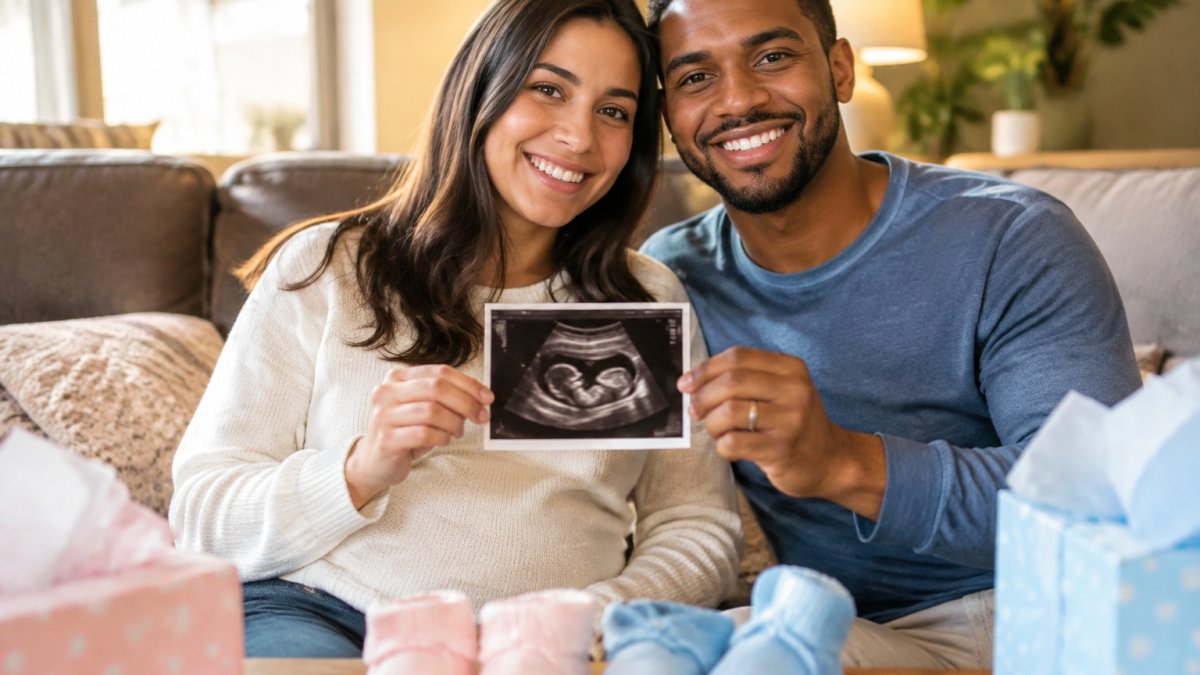
Printed keepsakes are often kept on the fridge or in a nursery frame before the baby arrives.
3. Bringing Family Into the Experience
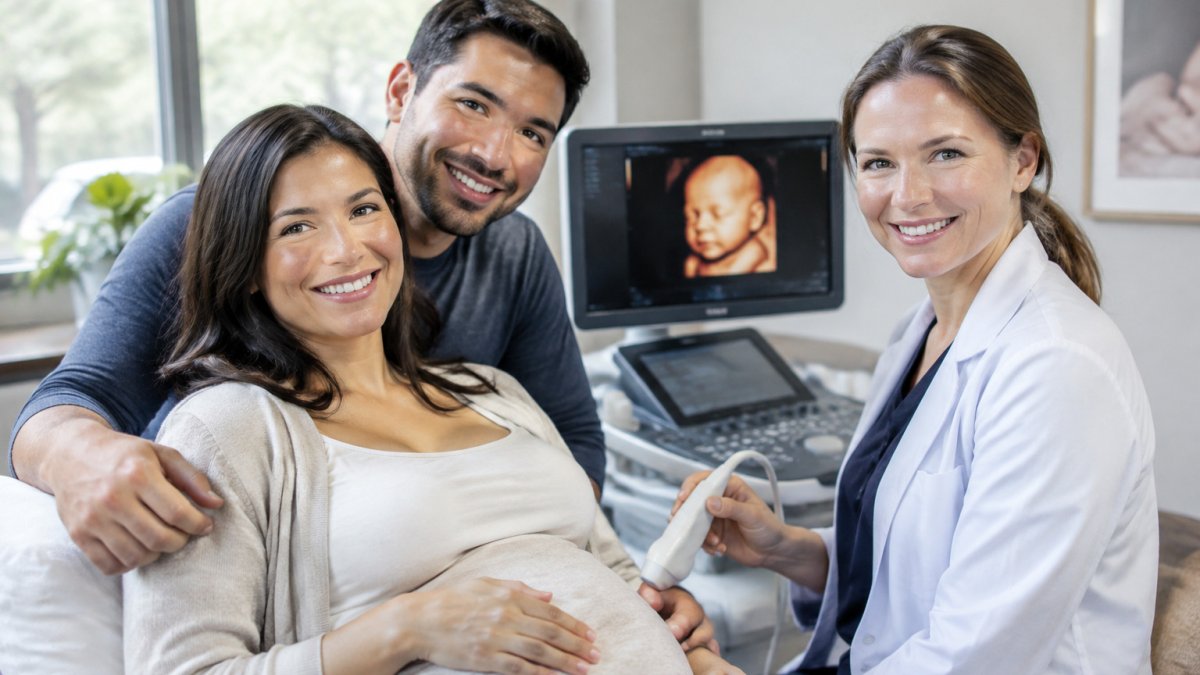
Grandparents, siblings, and friends rarely get to attend a medical ultrasound. An elective session changes that. Families book together, crowd around the screen, and react in real time.
The keepsakes extend the moment further. Photos and prints travel to relatives who live far away, and they give older siblings something concrete to connect with. For a family announcing a pregnancy, that shared reveal often matters more than the image quality itself.
When to Get a 3D Ultrasound for the Best Images
Many families find that the period between about 26 and 30 weeks of gestation offers good conditions for clear images, though results depend on the baby's position and other factors. Confirm your timing with your prenatal provider and the studio.
Image quality can vary with gestational age, since earlier and later scans each present different challenges for clarity.
Fetal position decides more than timing does. A baby facing the mother's spine will not show a face no matter how good the equipment is. That is why a session may include a walk, a snack, or a position change to encourage movement.
Once you know your window, you can book an appointment for the right week.
Are 3D Ultrasounds Accurate for Looks? Setting Realistic Expectations
A 3D ultrasound is accurate for external anatomy, not a prediction of what your child will look like at birth. The image reflects the baby at that moment, pressed against fluid and tissue. Understanding what the technology can and cannot do starts with the difference between 3D and 4D, because parents often use the terms interchangeably when they are not the same product.
3D vs. 4D: What Actually Changes
A 3D scan captures a still, three-dimensional surface rendering, a sculpted snapshot of the face or another body part. A 4D scan adds time as the fourth dimension, producing a short video-like sequence of that same surface moving in real time. The FDA's overview of ultrasound imaging describes 3D and 4D fetal ultrasound as visualization tools that show surface features, and the practical difference for parents is format: a print versus a clip.
That distinction shapes what you should expect. A 3D still can look remarkably detailed when the baby is cooperative, because the sonographer can freeze the best frame. A 4D recording shows movement, yawns, swallows, hand-to-face motion, but motion blur and fluid distortion are more visible frame to frame.
What Softens the Result
Several factors affect image quality regardless of whether you choose 3D or 4D:
- Fluid levels: good amniotic fluid gives a clean surface; low fluid blurs it.
- Placenta position: an anterior placenta can block the face.
- Hands and cord: babies often cover their faces at exactly the wrong moment.
- Movement: motion blur is real, especially in 4D.
- Maternal body habitus: more tissue between the probe and the baby can reduce clarity.
What most guides miss is that a beautiful image is partly luck. A skilled sonographer improves the odds by adjusting the probe angle, changing the rendering settings, and giving the baby time to move, but no one can promise a perfect portrait. Ask ahead of time what happens if the images come out unclear, and get the policy in writing.
The Honest Accuracy Boundary
A 3D or 4D image is a surface rendering, not a diagnostic view of internal organs, and it is not a substitute for the medically indicated 2D ultrasound your OB orders. If anything in a session concerns you, raise it with your prenatal provider.
3D Ultrasound Risks and Safety Boundaries Every Parent Should Know
Ultrasound is generally regarded as low-risk when used by trained professionals for limited sessions, and it should be treated with care. UT Southwestern Medical Center's guidance on keepsake scans advises avoiding keepsake 3D and 4D ultrasounds and describes the ALARA principle: exposure as low as reasonably achievable.
That is the honest boundary. Ultrasound energy can produce heat, so sessions should be short and infrequent, and the person operating the machine should be trained to do so. Elective scans are not a substitute for medically indicated exams, and they cannot diagnose or rule out conditions.
Watch out: booking with an untrained operator or skipping your routine prenatal care to rely on a keepsake session is where real risk creeps in. Keep your OB appointments, and treat an elective scan as a supplement, never a replacement. For common safety questions and our policies, see the FAQ.
Is 4D Ultrasound Covered by Insurance? What Parents Actually Pay For
Elective 3D or 4D ultrasounds are generally not covered by insurance, which is why it helps to check with your plan before booking. Medically indicated ultrasounds ordered by your provider are the ones insurers typically pay for.
What to Ask Before You Book
Before you book with any studio, get clear answers to these questions:
- Session length: how many minutes of actual scan time versus total appointment time?
- Included deliverables: how many prints, and are digital files included or sold separately?
- Sonographer credentials: who operates the machine, and what training do they have?
- Unclear-image policy: if the baby hides or the images are poor, is a repeat visit free, discounted, or not offered?
- Guest policy: how many people can attend, and are children welcome?
- Accessibility and language: is the space wheelchair accessible, and is interpretation available if needed?
Compare the all-in cost for the deliverables you actually want, since pricing depends on the session length, number of prints, and add-ons.
How to Prepare for the Session
Preparation is simple but matters. Staying hydrated in the days before an appointment is generally a good habit, and a snack or short walk before a scan may sometimes encourage fetal movement; ask your provider for guidance. Wear comfortable clothing that allows easy access to the abdomen. Bring your partner, a sibling, or a grandparent if the studio allows guests, the shared moment is often the point.
Confirm your gestational window with the studio before paying, since timing can affect image clarity.
Evaluating Value, Not Just Price
A neutral checklist helps separate a good session from a cheap one:
| Decision Factor | What to Check | Why It Matters |
|---|---|---|
| Gestational age | 26-30 weeks ideal | Fuller features, more room to move |
| Operator training | Ask about qualifications | Safe, skilled machine handling |
| Package contents | Prints, digital files, session length | Determines real value |
| Unclear-image policy | Repeat visit terms | Protects your spend |
| Insurance | Call your plan first | Elective scans usually not covered |
| Guest and accessibility | Attendance limits, wheelchair access | Keeps the experience inclusive |
When comparing options, look at what each package includes, session time, number of prints, digital files, and the policy for a repeat visit if the baby hides. For current pricing, contact BabyView3D or visit our locations.
Frequently Asked Questions
Why don't doctors do 3D ultrasounds routinely?
Standard prenatal care relies on 2D ultrasound because it is well suited to measuring growth and screening for problems. The FDA notes that 3D fetal ultrasound can show some facial features and possibly other parts such as fingers, but that extra detail is not needed for most medical decisions. Elective 3D sessions exist for bonding and keepsakes, not diagnosis, and they never replace the scans your obstetric provider orders.
How many weeks pregnant is best for a 3D scan?
Image clarity can vary with gestational age, fetal position, and the amount of amniotic fluid. Ask your provider about your own pregnancy before booking. Ask your provider about your own pregnancy before booking, and expect that fetal position on the day affects what the sonographer can capture.
Are 3D ultrasounds accurate for looks?
A 3D ultrasound builds a three-dimensional image from sound waves, and a systematic review reports that 3D imaging can help parents recognize the fetus, including its face and other features. That said, the image is a rendering, not a photograph. Fluid, fetal position, and the amount of padding around the face all change the result, so treat the pictures as a preview rather than a prediction of exactly how your baby will look at birth.
Is 4D ultrasound covered by insurance?
Elective 3D and 4D sessions are generally not covered by insurance because they are not ordered to diagnose or treat a condition. Medically indicated ultrasounds ordered by your provider are the ones insurers typically pay for. Before you book, call your plan to ask about coverage, and contact BabyView3D for its current pricing and package details.
The pull toward seeing your baby's face before birth is real, and it deserves an experience built around care rather than a rushed appointment. BabyView3D offers stunning 3D ultrasound imaging, a warm and memorable session, and keepsakes you can cherish for years. Our team helps families across Arlington and the surrounding TX area capture precious moments in a welcoming, spa-like setting. Get started with BabyView3D and see your baby in 3D before they arrive.