 blog
blog
Best 3D Ultrasound Features for Expectant Parents
Table of Contents
- What Makes 3D Ultrasound Features Stand Out
- 3D Ultrasound vs 4D Ultrasound: Understanding the Difference
- Best Time for 3D Ultrasound and Image Quality
- Image Resolution and Clarity: Core Technical Features
- 3D Ultrasound Keepsake Photos and Video Options
- How to Choose a 3D Ultrasound Provider
- Why These Features Matter for Your Pregnancy Experience
- Frequently Asked Questions
Last Updated: October 11, 2026
What Makes 3D Ultrasound Features Stand Out
Three-dimensional ultrasound technology has transformed how expectant parents connect with their babies during pregnancy. Unlike traditional 2D ultrasounds that show flat, cross-sectional images, 3D ultrasound features capture volumetric data that reveals your baby's face, body, and movements in stunning detail. At BabyView3D, we've helped families experience this technology firsthand, and the difference is remarkable.
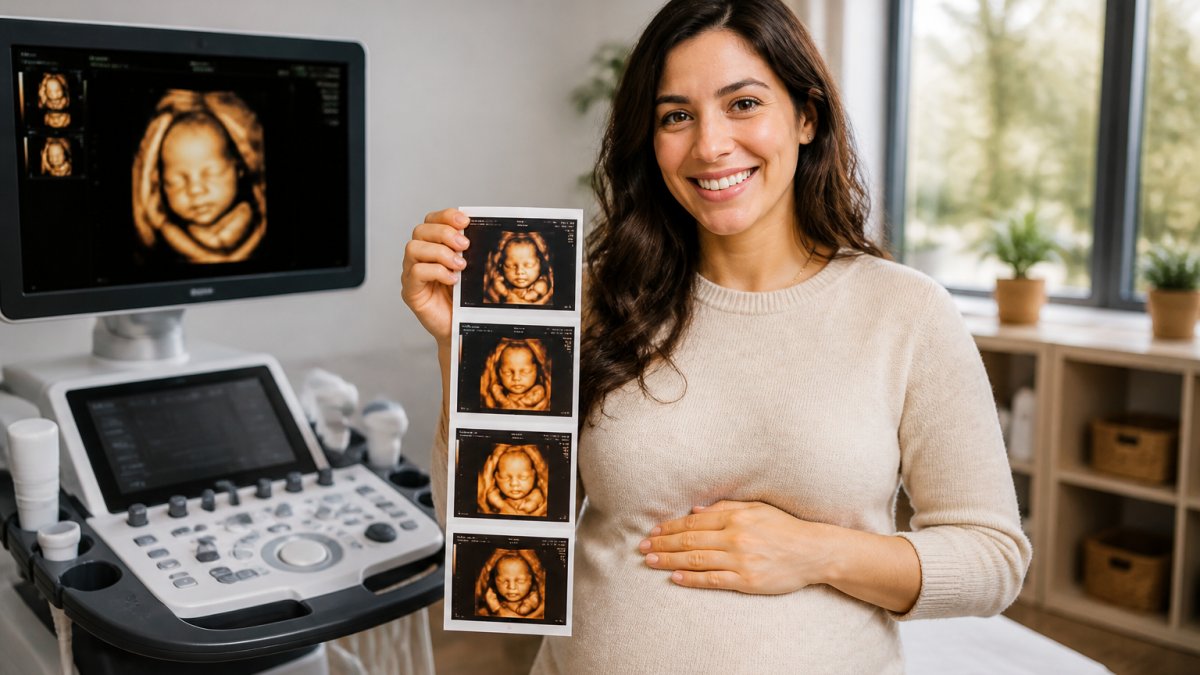
The core appeal of 3D ultrasound features lies in their ability to create lifelike images you can see from multiple angles. Instead of interpreting abstract lines and shadows, you're looking at something that resembles an actual photograph of your baby. This clarity transforms the pregnancy experience from clinical to deeply personal.
What sets the best 3D ultrasound features apart is their combination of image quality, processing speed, and the ability to generate keepsakes. Modern systems don't just capture static images, they record video sequences, allow real-time rotation of the 3D model, and produce high-resolution prints and digital files you can share with family.
3D Ultrasound vs 4D Ultrasound: Understanding the Difference
The distinction between 3D and 4D ultrasound is straightforward: 4D adds the element of time. A 3D ultrasound captures a still volumetric image of your baby at a single moment. A 4D ultrasound records that same 3D image in motion over time, showing your baby yawning, stretching, or moving their hands across their face in real time.
For most expectant parents, 4D ultrasound features provide the more memorable experience because movement brings personality to life. Watching your baby kick or suck their thumb in real time creates an emotional connection that static images cannot match. However, 4D sessions typically run longer than 3D-only appointments.
The practical difference comes down to what you value. If your priority is a beautiful keepsake photo for the nursery, 3D ultrasound features deliver that perfectly. If you want to see your baby's personality and movements, 4D is the investment that justifies the premium.
Best Time for 3D Ultrasound and Image Quality
Timing determines everything when it comes to 3D ultrasound image quality. The ideal window is 26 to 34 weeks of gestation. Before 26 weeks, your baby's facial features are still developing and the amniotic fluid volume is lower, making positioning difficult. After 34 weeks, your baby takes up more space in the uterus, leaving less room for clear imaging angles.
Within that window, weeks 28 to 32 are considered optimal. Your baby's face is fully formed and recognizable, but they still have enough space to move and change position. The skin is also at the right stage of development to show detail without excessive shadowing.
Image quality depends on several factors beyond timing. Maternal body composition, amniotic fluid volume, and baby's position all affect what the ultrasound can capture. Some babies cooperate by facing the transducer; others turn away. The best 3D ultrasound providers account for these variables and have techniques to encourage optimal positioning. These professional adjustments ensure that the resulting images are clear enough to serve as cherished keepsakes, much like the most thoughtful baby shower gifts that celebrate a new arrival.
Image Resolution and Clarity: Core Technical Features
Resolution in 3D ultrasound is measured by how finely the system can detect and render anatomical details. The best 3D ultrasound features use advanced transducers and processing algorithms that capture data at high spatial resolution, then reconstruct it into a clear, detailed model.
Modern systems operate at frequencies between 4 and 8 MHz, with higher frequencies providing better resolution but less penetration through tissue. The trade-off is managed by sophisticated beamforming technology that focuses the ultrasound energy precisely where needed.
Clarity is also affected by image processing. After raw ultrasound data is collected, software applies rendering algorithms that smooth surfaces, enhance contrast, and remove artifacts. The difference between a mediocre 3D ultrasound image and an excellent one often comes down to the quality of this post-processing step.
| Feature | Impact on Quality | What to Look For |
|---|---|---|
| Transducer frequency | Resolution vs. penetration balance | 4-8 MHz range preferred |
| Frame rate | Smoothness of real-time movement | 20+ fps for fluid motion |
| Processing software | Final image clarity and detail | Advanced rendering algorithms |
| Operator skill | Positioning and technique | Experienced sonographers |
3D Ultrasound Keepsake Photos and Video Options
The keepsake aspect is what makes 3D ultrasound features special for families. Most providers offer multiple formats: high-resolution printed photos and digital image files.

Printed photos are the classic keepsake. They're framed and displayed in nurseries, given to grandparents, and become part of your family's memory collection. Digital files offer flexibility, you can share them on social media, email them to distant relatives, or print them yourself at various sizes.
How to Choose a 3D Ultrasound Provider
Selecting the right provider for your 3D ultrasound experience matters. Start by verifying credentials. Sonographers should be registered and certified by the American Registry for Diagnostic Medical Sonography (ARDMS) or hold equivalent credentials.
Ask about equipment. The best 3D ultrasound features depend on modern ultrasound systems.
Experience with pregnancy imaging specifically is essential. A sonographer skilled in cardiac ultrasound or abdominal imaging may not be experienced with the unique positioning and timing challenges of fetal 3D imaging.
Inquire about their approach to safety. Ultrasound is generally considered safe during pregnancy, but the principle of "as low as reasonably achievable" (ALARA) applies (value is what Coveo indexes and uses as the title in Search Results.--> <title>Guidelines...).
Location and convenience matter too. In Arlington, BabyView3D offers the advantage of in-home appointments, eliminating travel stress and allowing you to be in your own comfortable environment. Other providers operate from clinical offices or boutique imaging centers. Choose based on what helps you relax and enjoy the experience.
Why These Features Matter for Your Pregnancy Experience
Understanding 3D ultrasound features isn't just about technology, it's about what these capabilities mean for your pregnancy journey. Seeing your baby in 3D creates a tangible connection that abstract 2D images cannot replicate. This connection has real emotional benefits, especially for parents experiencing pregnancy anxiety.
The keepsake aspect transforms the experience from a medical procedure into a memory-making event. You're not just getting diagnostic information; you're capturing a moment in time with your baby that you can revisit and share throughout your life.
The ability to see your baby's movements and expressions in 4D adds another dimension to bonding. Watching your baby yawn, stretch, or respond to sound creates a sense of personality and individuality before birth. This early connection often deepens the parent-child bond after delivery.
For families planning gender reveals or special announcements, high-quality 3D ultrasound images provide the visual confirmation and emotional impact that make those celebrations meaningful. Instead of a grainy 2D image, you have a beautiful, clear photo that captures the moment.
Choosing the right 3D ultrasound experience means prioritizing image quality, provider credentials, and the emotional connection you'll feel seeing your baby in stunning detail. BabyView3D brings this experience directly to your home in Arlington, combining professional-grade 3D ultrasound imaging with the comfort and convenience of your own space. Our team specializes in capturing the best 3D ultrasound features, crystal-clear facial images, and keepsake-quality photos and videos, that let you truly see and bond with your baby before birth. Book Now to schedule your memorable 3D ultrasound session and receive high-resolution digital files and printed keepsakes you'll treasure forever.
Frequently Asked Questions
What features should I look for in a 3D ultrasound?
The most important 3D ultrasound features include high image resolution that shows fine facial details, real-time viewing capability so you can see your baby move, multiple viewing angles to capture the best perspective, and keepsake options like printed photos or digital files. Look for providers using current ultrasound technology and trained technicians who can optimize images for your baby's position and gestational age.
What is the difference between 3D and 4D ultrasound?
3D ultrasound captures a static three-dimensional image of your baby from multiple angles, showing depth and detail. 4D ultrasound adds the fourth dimension of time, displaying your baby in motion in real-time. Both provide keepsake-quality images, but 4D offers the additional benefit of seeing your baby's movements and expressions as they happen, creating a more dynamic memory of your pregnancy.
When is the best time for 3D ultrasound imaging?
The best time for 3D ultrasound is typically between 26 and 30 weeks of gestation. During this window, your baby has developed enough facial features to be clearly visible, but there is still adequate amniotic fluid for optimal imaging. Earlier scans may show less detail, while later scans can be affected by the baby's position deep in the pelvis. Your provider can recommend the ideal timing based on your specific pregnancy.
Can I get keepsake photos or videos from a 3D ultrasound?
Yes, keepsake photos and videos are a standard feature of 3D ultrasound services. Most providers offer printed photos, digital image files you can share with family, and some provide video recordings of the session. These keepsakes allow you to preserve the memory of seeing your baby before birth and share the experience with loved ones who couldn't attend the appointment.