 Ultimate guide
Pregnancy Bonding Experiences: Ideas to Try at Home and Beyond
Quick Summary
Pregnancy bonding experiences are activities expectant parents use to build an emotional connection with their unborn baby, from talking, singing and gentle belly touch to partner routines and elective 3D or 4D ultrasound. Bonding unfolds over time and often continues after birth, so there is no single right way to do it.
- Talking, singing and reading aloud are accessible habits you can start at home.
- Babies can begin responding to outside sounds around 18 weeks of gestation.
- Partners do best with a clearly named role and a fixed daily or weekly routine.
- Gentle belly touch can help you notice patterns in your baby's movement over time.
- If bonding feels hard, a journal entry or one sentence a day is enough.
Table of Contents
- What Pregnancy Bonding Experiences Look Like
- Talking, Singing and Reading to Your Baby
- Gentle Touch, Movement and Responding to Your Baby
- Prenatal Bonding Activities for Partners and Siblings
- Relaxation and Meditation for a Calmer Connection
- Seeing Your Baby: 3D Ultrasound Bonding in Arlington
- Booking Your Visit to BabyView3D in Arlington
- Frequently Asked Questions
What Pregnancy Bonding Experiences Look Like
Last Updated: November 15, 2026
Pregnancy bonding experiences are the activities expectant parents use to build an emotional connection with their unborn baby before birth. They range from simple at-home rituals, like talking to the belly or playing a favorite song, to professional elective ultrasounds that let families see their baby's face and movements.
Bonding during pregnancy is a process rather than a single moment. Research published in PMC (National Library of Medicine) has identified distinct trajectories of maternal bonding from late pregnancy through 12 months postpartum, showing that the connection evolves over the perinatal period (pubmed.ncbi.nlm.nih.gov). PMC study on trajectories of maternal bonding from late pregnancy to 12 months postpartum
It is also normal if the feeling does not arrive right away. Some parents do not feel an immediate bond with their unborn baby, and that connection can take time to develop, often continuing after birth.
Most bonding experiences fall into three broad groups: sensory activities such as talking, singing and gentle touch; shared activities involving a partner or older children; and quiet practices like relaxation and journaling. Visual experiences, including 3D and 4D ultrasound, add a fourth category for families who want to see their baby.
Talking, Singing and Reading to Your Baby
Talking and singing to your baby are among the most accessible bonding activities. Babies can begin hearing sounds from the outside world around 18 weeks of gestation, so your voice is a familiar presence long before birth.
Try these simple habits:
- Speak to your baby by name or nickname each morning.
- Sing a favorite lullaby or song during your evening routine.
- Read a short picture book aloud, letting your partner take a turn.

Gentle Touch, Movement and Responding to Your Baby
Many parents enjoy gentle belly touch or massage, which can also become a way to notice fetal movement. When your baby kicks or shifts, pause and press lightly in the same spot, then wait for a response.
Keep touch relaxed and comfortable. Stop if anything feels uncomfortable, and talk with your healthcare provider about any changes in movement that concern you.
Prenatal Bonding Activities for Partners and Siblings
Partners and older children can take part in prenatal bonding through shared routines, but the activities work best when they are specific to the pregnancy stage and to each person's comfort level. Partners who are given a clear, named role, rather than a general invitation to "be involved", often find it easier to take part consistently.
Partner activities by trimester
First trimester (weeks 1-13): The baby is not yet moving in a way a partner can feel, so connection tends to come through shared anticipation and caregiving. Practical options include:
- Attending the first prenatal appointment together and writing down questions in advance.
- Starting a shared journal or phone note where each partner records one observation a week.
- Taking over one household task, cooking, grocery runs, or bedtime routine for older children, so the pregnant partner has a consistent rest window.
Second trimester (weeks 14-27): This is when belly-focused activities become meaningful:
- A nightly "belly check-in": the partner places a flat hand on the belly for two to three minutes and says goodnight using the baby's name or nickname.
- A weekly reading session: the partner reads one short picture book aloud, turning pages slowly so the baby hears a consistent voice.
- A short walk after dinner, with the partner doing the talking and describing the neighborhood.
Third trimester (weeks 28-birth): Movement is stronger and more predictable, and partners can respond to it:
- When the baby kicks, the partner can press lightly in the same spot and wait briefly for a response.
- The partner takes over one bedtime song or lullaby that will carry over after birth.
- Planning a low-key date, a picnic at a local park, a slow walk, or a quiet dinner at home, keeps the pregnancy feeling like a joint project rather than a solo experience.
Sibling activities
Older children often bond through play and repetition rather than conversation. Simple options include:
- Letting the sibling choose a song to sing to the belly each night.
- Having the sibling pick a nickname to use when talking to the baby.
- Reading a board book to the belly, with a parent helping turn pages.
Watch out: Sibling activities should be supervised and gentle; a young child pressing hard on the belly or jumping on the pregnant parent is a common way these moments go wrong, so set a clear "flat hand only" rule before starting.
Making partner involvement stick
Agree on one or two routines in advance, a nightly belly check-in or a weekly reading session, so the activity has a fixed place in the day. If a partner travels, works nights, or is not physically present, a short recorded voice message or a shared photo log can serve the same bonding purpose.
Relaxation and Meditation for a Calmer Connection
Relaxation practices can help you feel more present with your baby, but they are not a test of how bonded you are. A short guided meditation, a few minutes of slow breathing, or a daily journal entry addressed to the baby can all create a quieter space for connection, and none of them is required. Cultivating this internal calm often ripples outward to strengthen the partnership you share, a dynamic explored by Geoffrey Rose as a foundational element of long-term emotional intimacy.
What is actually known about fetal hearing and response
A common claim is that babies "recognize" a parent's voice before birth. The evidence is more modest than that. Fetal hearing structures begin developing in the first trimester, and by roughly 18 weeks of gestation many babies begin responding to sounds from outside the womb.
That framing matters: if a parent misses a day of reading or singing, nothing is lost. The activity is for the parent's sense of connection, not a developmental requirement.
Bonding when pregnancy feels emotionally difficult
Connection does not always arrive on schedule. Some parents feel an immediate bond; others find it develops gradually, sometimes only after birth. That range is normal, and it is especially common when pregnancy is complicated by anxiety, depression, a high-risk diagnosis, prior infertility or pregnancy loss, or a stressful home situation.
Gentle options when connection feels hard:
- Lower the bar: one sentence spoken to the belly once a day is enough.
- Use a journal instead of speech if talking feels awkward; write one line a week.
- Try a five-minute body scan or slow-breathing exercise without any expectation of "feeling bonded" afterward.
Watch out: If you are experiencing thoughts of harming yourself or your baby, contact a healthcare provider or the 988 Suicide & Crisis Lifeline right away; bonding advice is not a substitute for crisis care.
Accessible and inclusive options
Bonding ideas often assume a pregnant person who can move freely, speak comfortably, and has a partner at home. Alternatives that work for bed rest, disability, limited mobility, sensory preferences, or different family structures:
- If bed rest is prescribed, a partner or family member can place a hand on the belly while the pregnant parent listens to a favorite song.
- If speaking feels uncomfortable, recorded voice notes or written letters work the same way.
- If touch is overstimulating, a weighted blanket or a hand resting near, not on, the belly can be a gentler option.
Journaling and letters
Journaling is especially simple: write a short letter each week about how you are feeling, what you are looking forward to, and what you want your baby to know.
If pregnancy feels emotionally difficult, these practices are optional. Bonding does not need to look a certain way, and support from a healthcare provider or counselor is a sensible step if anxiety feels overwhelming.
The article lists a few gentle options for building connection when bonding feels hard, which can be scanned quickly:
| Option | Best for | Key note |
|---|---|---|
| Five-minute body scan or slow breathing | Feeling calmer without pressure | No expectation of feeling bonded afterward |
| Journal entry or weekly letter | Parents who find speaking awkward | No required format; keep notes to share later |
| Recorded voice note | Bed rest or limited mobility | Works the same way as speaking aloud |
| Hand resting near the belly | Touch feeling overstimulating | Weighted blanket is a gentler alternative |
| One sentence to the belly daily | Low energy or low mood | Lowering the bar is enough |
Seeing Your Baby: 3D Ultrasound Bonding in Arlington
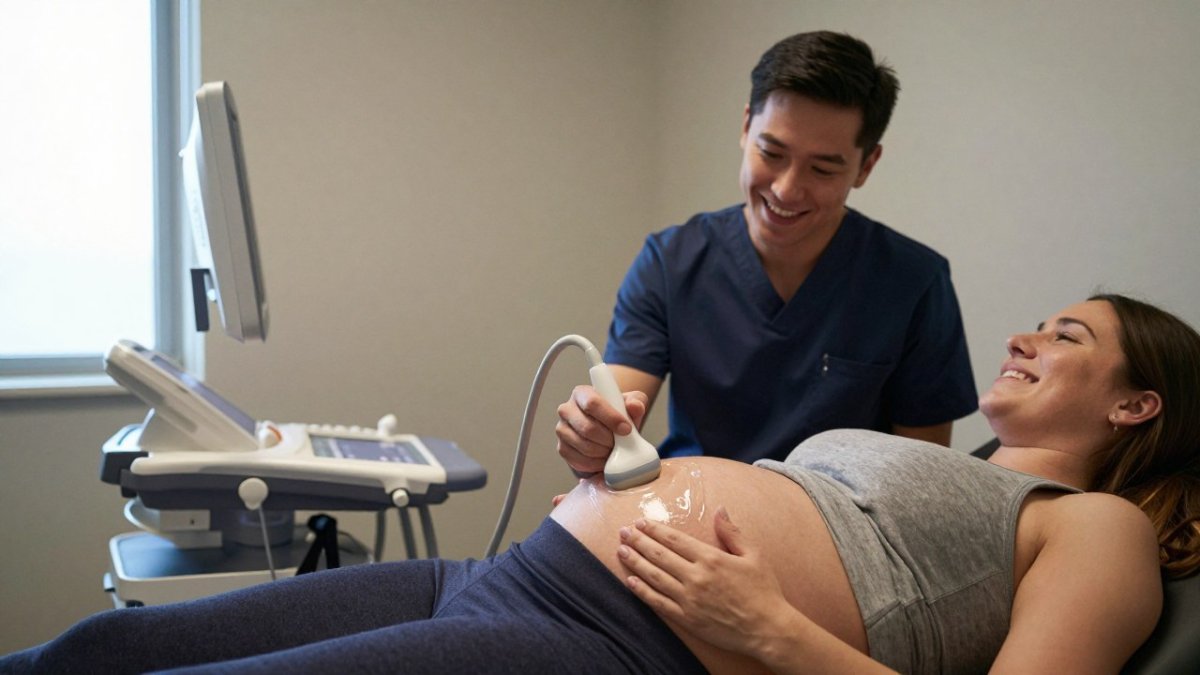
For some families, seeing the baby is the most meaningful part of the experience. Elective 3D and 4D ultrasound sessions are offered for bonding and entertainment, not as a replacement for prenatal medical care or diagnostic ultrasound.
Image quality depends on more than equipment. Gestational age, fetal position and the amount of amniotic fluid all affect how clearly the baby's face can be seen. You can compare the imaging packages and what each includes before deciding.
For families weighing their options, our Services page covers the imaging packages available, and our Gallery shows sample images so you can see what the experience looks like. Our Locations page explains where the studio is and whether it fits your travel plans.
Booking Your Visit to BabyView3D in Arlington
Before you book, consider which pregnancy stage suits your goals. Earlier sessions often focus on seeing the developing baby, while later appointments may show more recognizable facial features.
Confirm whether printed or digital keepsake images are included, and ask what happens if the baby is not in a favorable position.
Choosing the right bonding experience is a personal decision, and the best option is the one that feels comfortable for your family.
Frequently Asked Questions
Can you see baby face clearly during a 3D ultrasound?
Sometimes, but not always. Image quality depends on gestational age, fetal position and the amount of amniotic fluid around the baby. A baby lying with its face toward the placenta or tucked against the uterine wall can be harder to see. At BabyView3D, we explain that a clear view of the face cannot be guaranteed in every session, so families should arrive with realistic expectations and ask the ultrasound professional about timing for their goals.
How can I start bonding with my baby during pregnancy?
Many families start with simple daily habits: talking to the baby, singing a favorite song, reading aloud, or placing a hand on the belly and noticing movements. Babies can hear sounds from outside the womb starting around 18 weeks of gestation, so voices and music may be part of early connection. Bonding often develops gradually, and it is normal if the feeling takes time to appear.
How long until I feel bonded to my baby?
There is no fixed timeline. Some parents feel a strong connection early in pregnancy, while others feel it only after the baby is born. If you feel distant or anxious, talk with your healthcare provider, who can point you to support.
What are the best pregnancy bonding experiences for partners?
Partners can read aloud, sing, attend prenatal appointments, rest a hand on the belly to feel movement, and talk to the baby using a chosen name or nickname. Going on short walks, cooking together or planning a shared keepsake also builds connection. Partners can also take on practical tasks that free up time for relaxation, which supports the expectant parent's wellbeing.
Does prenatal bonding affect baby development?
Prenatal bonding is mainly about the emotional connection between parents and baby. Bonding activities are not a substitute for routine prenatal care. Keep all scheduled checkups with your obstetric provider, and ask them before starting any new physical activity.
Is a 3D ultrasound a substitute for my regular prenatal ultrasound?
No. An elective 3D ultrasound at BabyView3D is for bonding and keepsakes. It does not replace diagnostic ultrasounds or routine prenatal care ordered by your doctor or midwife. Any medical questions or concerns should go to your healthcare provider. BabyView3D is operated by S&S Life Scan Corp in Arlington, Texas, and staffed by experienced, credentialed ultrasound professionals.
What if pregnancy feels emotionally hard and bonding does not come naturally?
Feeling disconnected or anxious during pregnancy is common. Small steps such as short daily talks, gentle breathing, or sharing feelings with a partner can help. If anxiety or low mood persists, contact your healthcare provider or a perinatal mental health professional for support.