 ultimate-guide
Non Diagnostic Ultrasound Benefits: What Parents Gain
Table of Contents
- What Non Diagnostic Ultrasound Benefits Actually Mean for Parents
- 3D Ultrasound Benefits: Bonding, Keepsakes, and Family Connection
- Diagnostic vs Non-Diagnostic Ultrasound: What Each One Does
- 3D Ultrasound Safety: What Parents Should Know
- When to Get a 3D Ultrasound for the Best Images
- What to Expect at a Keepsake Session in Arlington, TX
- Conclusion: Is a Non Diagnostic Ultrasound Right for You?
- Frequently Asked Questions
Last Updated: October 12, 2026
What Non Diagnostic Ultrasound Benefits Actually Mean for Parents
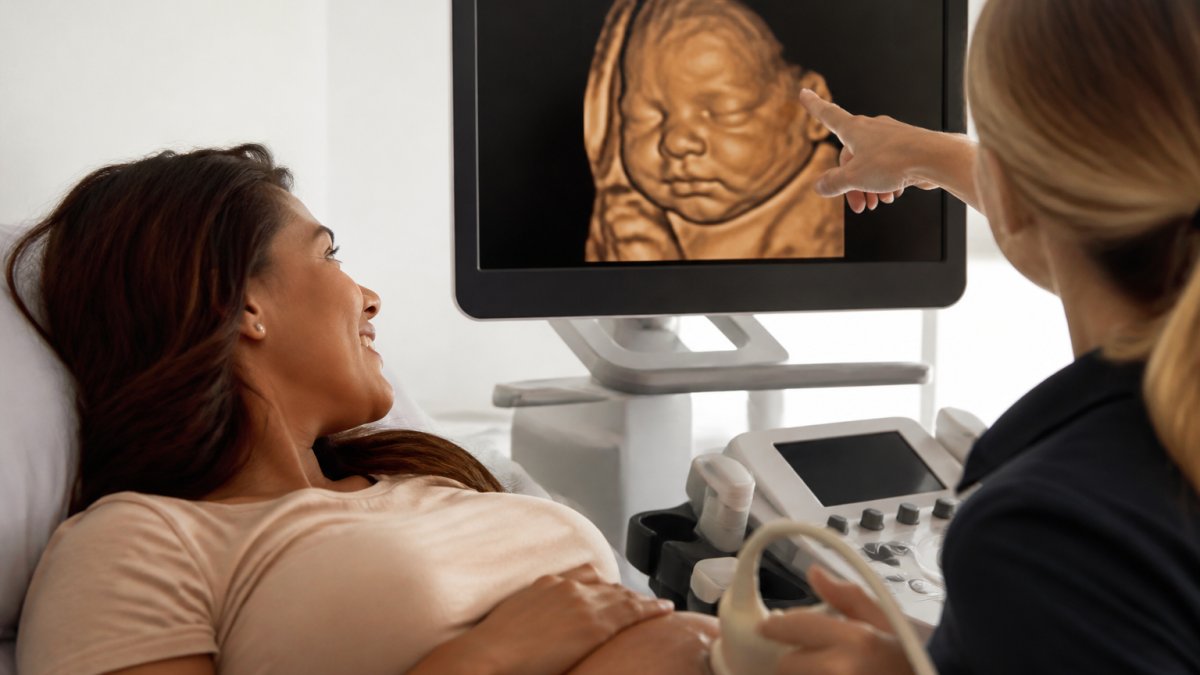
Non diagnostic ultrasound benefits come down to one thing: a bonding experience, not a medical test. Instead of measuring organs or checking growth charts, an elective session is built around letting you watch your baby move, yawn, and hiccup in real time, then take those images home.
That distinction matters more than most parents realize. Your OB's scans are clinical tools, ordered to confirm dates, check anatomy, and monitor growth. An elective session has a different job entirely.
At BabyView3D, we've built our entire service around that difference. We are a keepsake studio in Arlington, TX, not a clinic, and we say so upfront. We do not screen for anomalies, we do not replace prenatal care, and we never hand you a diagnosis. What we offer is simpler and, for a lot of families, genuinely moving: a clear look at your baby, a few good photos, and a memory you keep.
The benefits parents describe most often fall into three buckets:
- Bonding: seeing a face rather than a grainy silhouette
- Connection: partners and siblings getting a real visual anchor
- Keepsakes: printed images and digital files you can share
Below, we'll walk through what each of those actually looks like in practice, how it differs from a diagnostic scan, and what to expect from a session here in Arlington.
3D Ultrasound Benefits: Bonding, Keepsakes, and Family Connection
The strongest argument for 3D ultrasound benefits is emotional, not clinical. A 2D image shows a cross-section; a 3D rendering shows a surface. For parents, that shift from "outline" to "face" is the whole point.
Partners feel it first. Many tell us the pregnancy stops being abstract the moment they see a nose or a chin. Siblings react even more directly, and families who bring a grandparent to the session often say that hour did more for their sense of connection than months of belly photos.
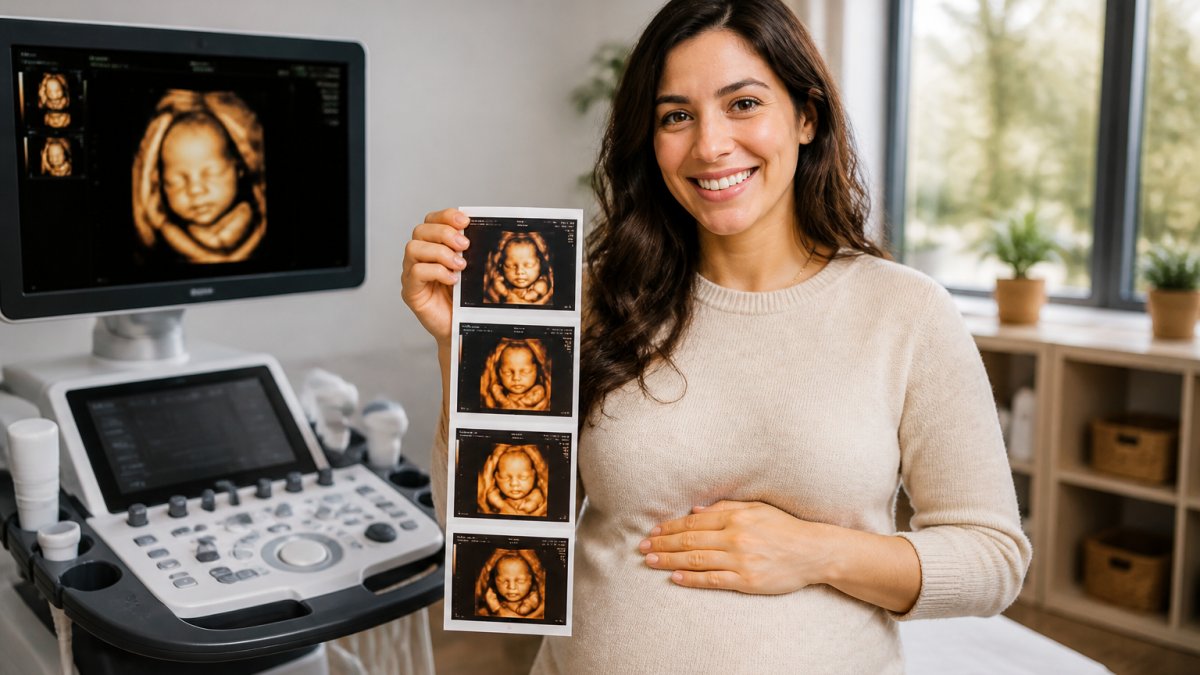
The keepsake side is practical. Sessions typically produce printed images and digital files, and many families use them for a gender reveal or a nursery wall. If you're planning a reveal, a non diagnostic ultrasound gives you a visual confirmation you can share, though we always note that sex determination is never guaranteed on any single scan.
A common mistake is treating the session as a photo booth. The best images come from a calm, unhurried appointment where the technician has time to work around the baby's position.
Diagnostic vs Non-Diagnostic Ultrasound: What Each One Does
Diagnostic and non-diagnostic ultrasound serve different purposes, and confusing the two is the single biggest source of anxiety we see. One is medicine. The other is a keepsake.
A diagnostic ultrasound is ordered by a physician and performed by a credentialed sonographer. It measures anatomy, checks growth, and produces findings your doctor interprets and acts on. It is part of your prenatal care.
A non diagnostic ultrasound is an elective, non-medical session. It produces images for you, not for your chart. No measurements are taken for clinical use, and no findings are reported to a physician.
| Feature | Diagnostic Ultrasound | Non-Diagnostic Ultrasound |
|---|---|---|
| Ordered by | Physician | You |
| Purpose | Medical assessment | Bonding and keepsakes |
| Who interprets | Your doctor | No clinical interpretation |
| Results go to | Your medical record | You, as images |
| Typical setting | Clinic or hospital | Elective studio |
Here's the part most guides get wrong: choosing an elective session does not mean skipping anything. Keep every appointment your doctor schedules. The elective scan sits alongside your care, not in place of it.
3D Ultrasound Safety: What Parents Should Know
3D ultrasound safety questions are fair, and the honest answer is that ultrasound is a well-established imaging method when used appropriately. The key phrase is "appropriately." Ultrasound delivers energy to tissue, which is why medical bodies generally advise that scans be performed for a reason and kept as brief as practical.
That principle is exactly why we run our sessions the way we do. We keep appointments short, we do not perform repeated scans on the same day, and we decline sessions that fall outside the range we consider reasonable. If you have a high-risk pregnancy or any concern about your baby, that belongs with your doctor, not with us.
A few practical points:
- Elective sessions are not a substitute for any diagnostic scan
- Tell us about your pregnancy history before the appointment
- Ask your OB if you have any specific restriction
- Any studio that pressures you into a long or repeated session is a red flag
For broader guidance on imaging during pregnancy, the FDA information on ultrasound imaging is a good starting point, and the American College of Obstetricians and Gynecologists publishes patient-facing resources on prenatal care.
When to Get a 3D Ultrasound for the Best Images
The best window for a 3D ultrasound is generally between 26 and 30 weeks. Before that, the baby is small and has little fat under the skin, so 3D renderings can look skeletal. After roughly 32 weeks, the baby has less room to move and often turns head-down, which makes the face harder to capture.
That said, "best" depends on what you want. Around 20 weeks you can usually get a clear sex determination, even if the facial detail is limited. Between 26 and 30 weeks you get the fullest facial features. Later sessions can still work well, but they depend heavily on position.
What most guides miss is that baby position, not gestational age, decides the final image quality. A cooperative baby at 28 weeks beats a stubborn one at 30.
If you're wondering about timing for a session near me in Arlington, the practical move is to book within the 26-to-30-week window and accept that a rescan may occasionally be needed.
What to Expect at a Keepsake Session in Arlington, TX
A keepsake session is designed to feel closer to a spa appointment than a clinic visit. You arrive, get settled on a comfortable couch, and watch the screen while the technician works. There is no rush and no medical chart.

At BabyView3D, our focus is on capturing high-quality 3D images and turning them into keepsakes you can hold onto. We are transparent about what we are: a non-clinical, bonding-focused experience, not a diagnostic service. Families across the Arlington area choose us for the atmosphere and the images, and we're glad to walk you through the process before you book.
A few things to bring or plan for:
- Wear comfortable, two-piece clothing for easy access
- Hydrate well in the days before your appointment
- Bring your partner, a parent, or a sibling if you'd like
- Decide in advance whether you want to know the sex
- Ask about print and digital file options when you book
For local pregnancy resources in the area, the March of Dimes pregnancy information covers prenatal care basics in plain language.
Conclusion: Is a Non Diagnostic Ultrasound Right for You?
Deciding whether to book an elective session comes down to what you're looking for. If you want a medical assessment, that's your doctor's job, and no elective studio should pretend otherwise. If you want to see your baby's face, share the moment with family, and leave with something you'll keep, a non diagnostic ultrasound is built for exactly that.
At BabyView3D, we offer stunning 3D imaging, a warm and unhurried experience, and keepsakes designed to be cherished. We're clear about our limits and confident about what we do well. Book Now with BabyView3D and see your baby in 3D before they arrive.
Frequently Asked Questions
What are the benefits of a non-diagnostic ultrasound?
A non-diagnostic ultrasound is designed for bonding and keepsake purposes, not medical evaluation. Parents get to see their baby's face, hands, and movements in 3D, which can create a stronger emotional connection before birth. Many families also use these sessions for gender reveals or to share images with relatives who live far away. Because the session is not a medical exam, it focuses on the experience and the keepsakes rather than measurements or health assessments.
Can a non-diagnostic ultrasound check whether my baby is healthy?
No. A non-diagnostic ultrasound is not a substitute for prenatal care and cannot confirm your baby's health. Only a diagnostic ultrasound ordered by your OB or midwife can assess growth, anatomy, and development. If you have concerns about your baby's health, talk to your prenatal care provider. Keepsake sessions are meant to complement, not replace, your regular medical appointments.
Is a non-diagnostic 3D ultrasound safe for the baby?
Ultrasound has been used in obstetrics for decades, and 3D imaging uses the same sound wave technology as standard 2D scans. The FDA advises that ultrasound be performed by trained operators and only when medically necessary, though elective sessions are widely offered. Reputable providers limit session length and follow safety guidelines. Always ask about the operator's training and the equipment used before booking.
When is the best time to get a 3D keepsake ultrasound?
Most providers suggest scheduling between 26 and 30 weeks of gestation for the clearest 3D images. At this stage, babies have developed facial features and often have enough amniotic fluid around them to allow good visibility. Earlier sessions around 20 weeks can still capture images, but the baby may look thinner and less defined. Later sessions after 32 weeks may be limited by the baby's position and reduced fluid.